
My colleague requested me to take a look at her bike.
She has just started riding a second hand gravel bike for a 40km city event. It is a CANYON Grail AL XXS. 650b wheels fitting smaller frame size, sounds it fits a small rider like her.
She complains of neck and shoulder pain after 10-15 minutes of riding.
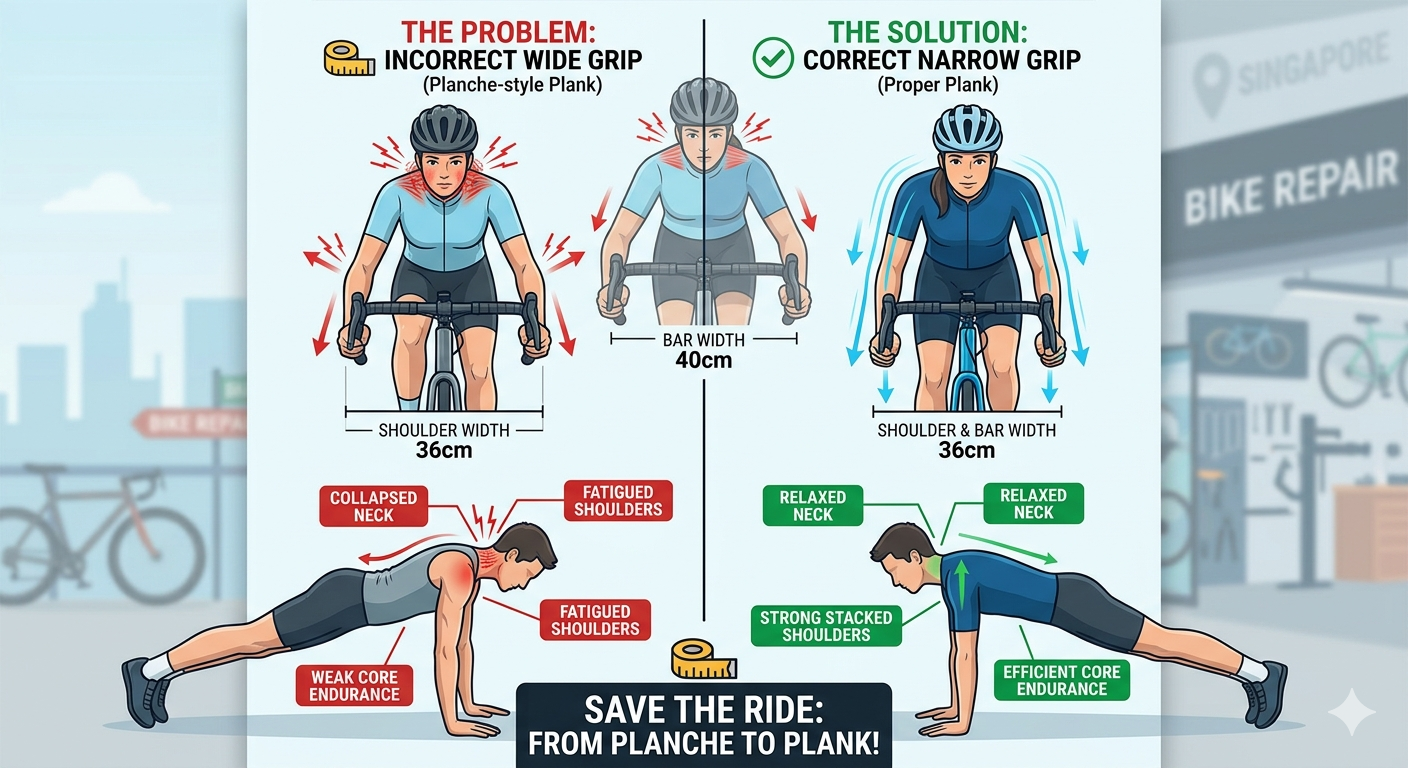
I looked at her bike – saddle height looks okay, it can be put forward very slightly bit, but the handle bar width was 40cm. Her shoulder’s width was 36cm. The measurement was between the acromial process, a landmark at the end of your collar bones.
No wonder.
Think of your position on the handlebars on the bike. It is a modified plank position.
With a 36cm shoulders on a controlling the gears and brakes installed on 40cm handlebar, your neck and shoulders feel heavier and tighter – worse when you need to control the brakes in a descent if you have a lot of mental stress. Losing grip on that may cost you your life. Planking with elbows farther away from your shoulder width is more challenging, and it is faster to fatigue.
I mean it.
I called my mechanics friend for a 36cm handlebar. Not many bike shops have the stock. There are too few women cyclists on Singapore’s road. Stocking an item that may not be sold is financially unwise. But if she force herself to a handle bar which is much wider than her shoulder, the problem can worsen
Hopefully I can save her ride from a wide plank back to a normal plank which is in better riding economy for core endurance, then she can enjoy her ride more.
According to Phil Burt, former Team Sky and Team GB Cycling Head Physiotherapist and bike fitter, these issues may not need a full-fledge, 4 hour bike fit session with 3D motion capture analysis and handlebar pressure mapping. The most important skill is understanding the interaction between the bike and the human body.
I look forward to more conversation like this.
Leave a Reply