
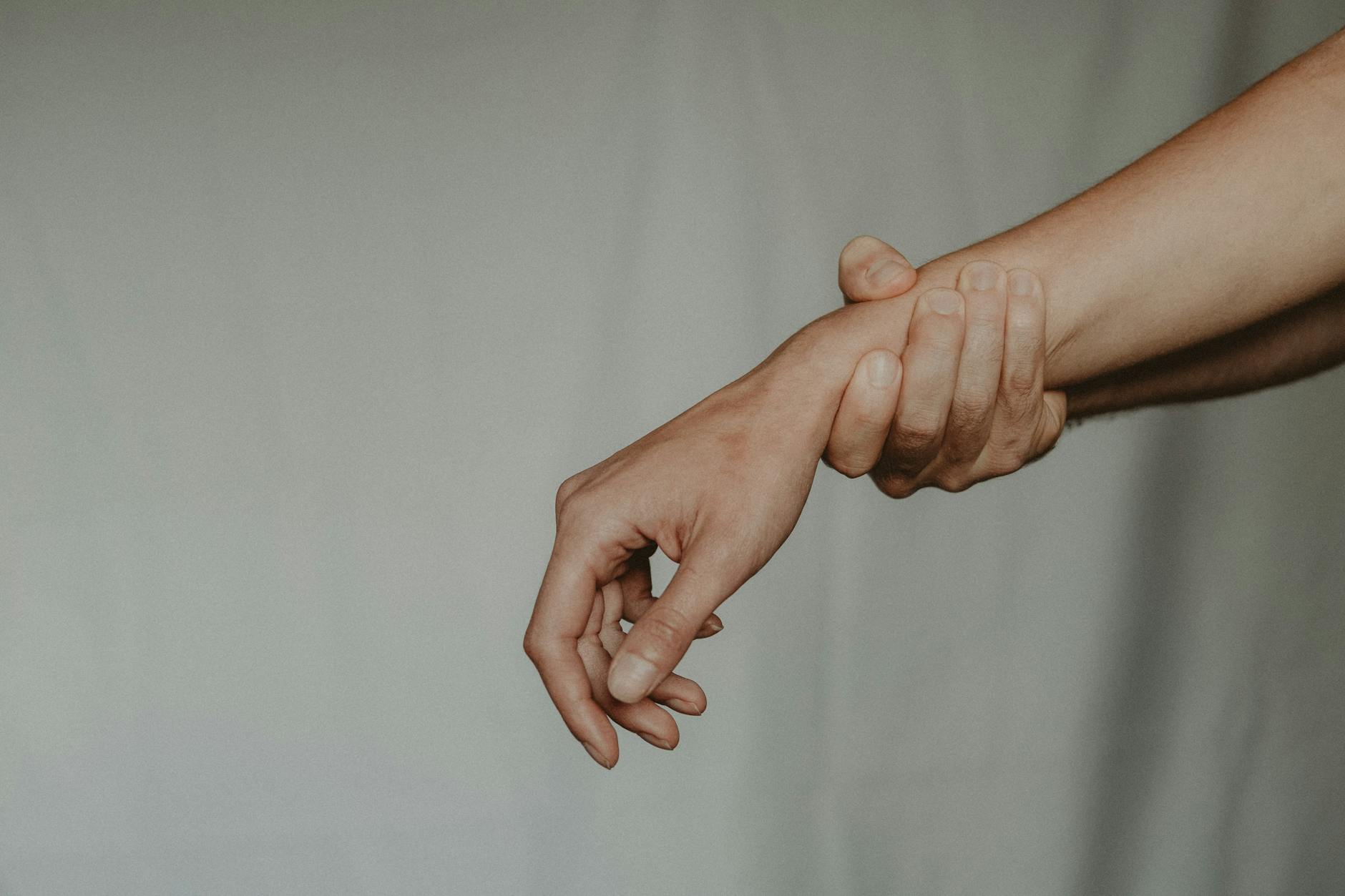
Seriously, this is my first time in my career that I hear an exercise recommended by a physiotherapist debunked straight from ChatGPT.
One day, an ex-colleague came to me fuming.
“My friend needs your help. Her physiotherapist told her to treat Mommy Thumb by… plunging her hand into a rice bucket! Speechless!”
Even my ex-colleague, who had long since left the healthcare profession to sell egg tarts, thought this sounded questionable. Naturally, I agreed to see the mother in question.
She admitted:
“Honestly, I almost went to buy a bag of rice and a bucket just to try it.”
This was her first child, then six months old. She was still on maternity leave—her company had given her a full year off. A high achiever in every sense, she had planned her pregnancy and birth like a project. She endured pregnancy discomforts, kept up with Pilates and weight training to ensure a smooth delivery, and even worked 12-hour days with her laptop perched on her belly until her due date. Swollen feet? Compression stockings and massages.
So when she developed thumb pain from caring for her baby, it felt like her perfectly planned journey had hit an unacceptable “failure.”
What Is De Quervain’s Syndrome?
De Quervain’s syndrome is an inflammation condition of the tendons that control thumb movement, caused by friction with the tendon sheath.

It’s a classic overuse injury. Women are more prone, especially after childbirth due to hormonal shifts and water retention that further narrow the tendon sheath. It also affects people in physically demanding jobs—chefs, nurses, vets—anyone who grips objects for long periods.
Clinically, it’s not just overuse but often the result of prolonged thumb abduction (spreading the thumb outward) and gripping, which strains the abductor pollicis longus muscle.
Embed from Getty ImagesWhen Ultrasound and Rice Buckets Don’t Work
The mother first consulted a physiotherapy clinic. She asked if ultrasound treatment would help. The therapist, eager to please, doubled the dosage and treatment time. It was painful, but she didn’t complain.
Then came the infamous advice: home rehab with the “rice bucket exercise.”Curious, I looked it up—it was something kids used to do for fun, plunging hands into rice and wriggling fingers.
But in the latest medical reviews on De Quervain’s, there is no scientific evidence supporting this exercise. You see, these exercises are mainly for climbers and weight lifters training their grip strength, but it should never be an exercise for patients with De Quervain’s syndrome.
Standard first-line treatments recommended by clinical practice guideline remain:
- Resting the tendon with splints
- Corticosteroid injections
- Supportive physiotherapy like ultrasound or taping
So where did “rice bucket therapy” come from? Social media trends. When I asked ChatGPT about it, the answer was straightforward:
“We do not recommend rice bucket exercises for De Quervain’s patients. They don’t address muscle imbalance and may worsen inflammation.”
ChatGPT
And I had no choice but to agree.
What I Found in Her Case
When I tested her grip, her wrist dropped abnormally. Not from weakness against gravity, but from severe tension in her flexor muscles (the ones used for gripping). Her forearm was visibly swollen, with overactive muscle fibers pulsing under the skin.
Meanwhile, the opposing extensor muscles (which pull the wrist and fingers back) were wasted and weak. This imbalance is classic in De Quervain’s: the gripping muscles dominate, while the stabilizers deteriorate.
Studies like Forman’s EMG research show that once grip strength exceeds 40% of max, even extensor muscles in the forearm must join in. But in these patients, the extensors simply can’t keep up.
Why Standard Advice Falls Short
In Singapore, patients with hand tendon issues are usually referred to physiotherapy departments, where cookie-cutting home exercise routines mostly involve stretching. Rarely are strengthening exercises for extensors or relaxation techniques for overactive flexors prescribed.
Overly aggressive stretching of inflamed tendons can even make things worse.
For this mother, I focused on rebalancing the muscles:
- Electrical stimulation to activate weak extensors
- Kinesio taping for support
- Gentle training to restore grip balance, especially wrist extensors
She avoided corticosteroid injections and custom splints. In the end, she regained enough hand strength to lift her child easily—even past toddlerhood.
The Takeaway
De Quervain’s syndrome isn’t just about “overusing the thumb.” It’s about muscle imbalance between overworked flexors and neglected extensors.
Quick-fix advice from outdated notes or social media trends (like the rice jar exercise) can mislead patients. The right approach is guided by both clinical evidence and a clear understanding of how the body generates force in everyday activities.
Sometimes, even ChatGPT gives better advice than a rushed therapist.
References:
Challoumas, D., Ramasubbu, R., Rooney, E., Seymour-Jackson, E., Putti, A., & Millar, N. L. (2023). Management of de Quervain Tenosynovitis: A Systematic Review and Network Meta-Analysis. JAMA network open, 6(10), e2337001. https://doi.org/10.1001/jamanetworkopen.2023.37001
Fakoya, A. O., Tarzian, M., Sabater, E. L., Burgos, D. M., & Maldonado Marty, G. I. (2023). De Quervain’s Disease: A Discourse on Etiology, Diagnosis, and Treatment. Cureus, 15(4), e38079. https://doi.org/10.7759/cureus.38079
Forman, D. A., Forman, G. N., Robathan, J., & Holmes, M. W. R. (2019). The influence of simultaneous handgrip and wrist force on forearm muscle activity. Journal of electromyography and kinesiology : official journal of the International Society of Electrophysiological Kinesiology, 45, 53–60. https://doi.org/10.1016/j.jelekin.2019.02.004
Goel, R., & Abzug, J. M. (2015). de Quervain’s tenosynovitis: a review of the rehabilitative options. Hand (New York, N.Y.), 10(1), 1–5. https://doi.org/10.1007/s11552-014-9649-3
Leave a Reply