
When a Physiotherapy-Led Senior Fitness Class Becomes News
A patient recently shared with me a piece of “news” that’s been circulating in Singapore media — about a physiotherapist-related complaint.
According to a report on Mothership.sg, a man whose mother attended a physiotherapist-led senior fitness class claimed that his 81-year-old mother fell and fractured her spine during the session. He said he had filed complaints to the fitness centre, the Singapore Physiotherapy Association, and even a Member of Parliament, but none of them went anywhere.
A Fitness Class Tailored for Older Adults
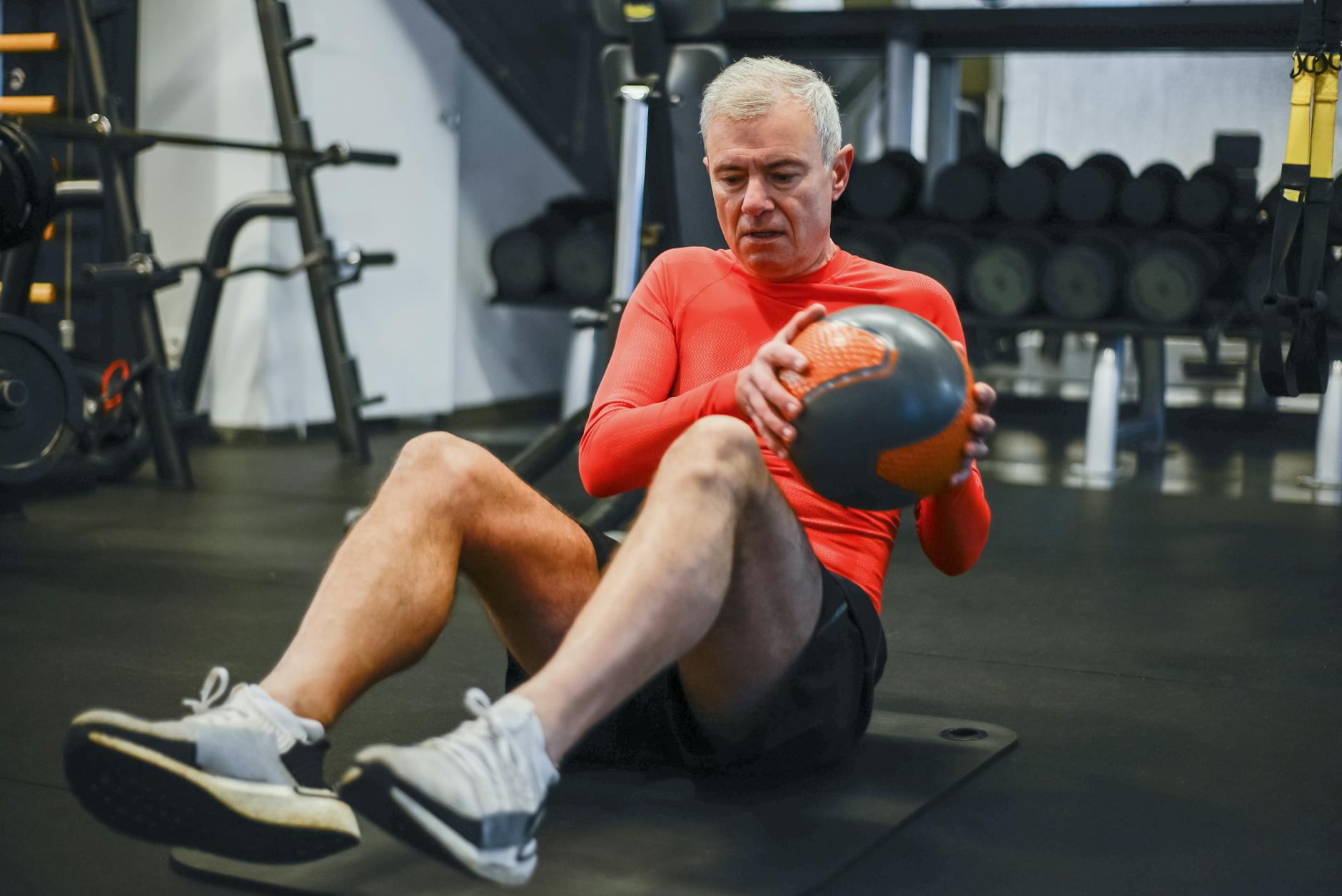
This class — said to be the first of its kind in Singapore — was designed and led by physiotherapists for adults aged 50 to 85. It’s essentially a gentler, modified version of CrossFit, which normally involves high-intensity workouts with weights, barbells, and body-weight movements.
According to promotional material, the programme is “customised based on participants’ abilities and fitness levels, with attention to exercise-related risks.” Seniors only need to pay S$35 per trial class and complete a health declaration form beforehand.
But what should we realistically expect older adults to be able to do?
At one end of the spectrum, the world has seen 80-year-olds complete full Ironman triathlons — swimming 3.8 km, cycling 180 km, and running 42 km.
At the other end, there are many 80-year-olds with extensive medical histories and physical limitations, lie we turn the pages of an encyclopedia. A physiotherapist leading a group exercise session obviously can’t train both groups the same way.
The idea of “customisation” sounds good, but proper modification based on each senior’s fitness level is essential — not optional.
According to the article, participants were required to arrive 20 minutes early for a pre-class interview to assess safety. However, it’s unclear whether the elderly couple in question actually did this.
How the Injury Happened
The son — who said he has a sports science degree and used to work as a trainer in a public hospital — reportedly brought his 81-year-old mother and 91-year-old father to the class. He told the media that participants were asked to perform “jumping and single-leg balance transfer” exercises, during which his mother fell.
From the video footage shared with the media, you can see his mother (in a pink top) doing warm-up exercises. Her balance clearly looked weaker than other participants — especially compared to her 91-year-old husband in a black shirt.

In geriatric physiotherapy, one simple way to assess fall risk is by observing how wide a person keeps their feet while standing or moving. If an older adult frequently widens their stance to maintain balance, it’s a red flag for instability.
A proper pre-exercise screening should include medical history, joint mobility, strength, and balance assessment. The report did not clarify whether the instructor identified these issues, nor was there video evidence of the actual fall — but the fact remains: she got injured.
The American College of Sports Medicine (ACSM) advises that exercise programmes for older adults should avoid explosive movements. When transitioning between exercises or shifting weight, seniors should move slowly to prevent falls.
The gym later told reporters that participants were never asked to jump — only to perform a sideways step.
A Spinal Fracture — and Its Consequences
The woman was sent by ambulance to Singapore General Hospital, where scans confirmed a spinal fracture. She was later discharged, but reportedly fainted at home due to medication side effects and fell again, worsening the fracture and compressing spinal nerves, which caused severe pain.
Osteoporosis is a key risk factor for fractures among elderly women — especially those who are post-menopausal, underweight, inactive, malnourished, or on long-term steroid medication.
Prolonged bed rest can worsen weakness and cause further complications.
The son said he wanted the fitness centre to pay for both hospitalisations, but online comments (especially on Reddit) were divided — with some users accusing him of trying to exploit the situation.
Why Not Seek Proper Physiotherapy?
If his mother had already been discharged, the son could have requested physiotherapy for spinal fracture recovery directly from the same centre — especially since it employs licensed physiotherapists.
Strangely, despite claiming professional experience, he didn’t ask for that. Instead, he focused on financial compensation from his mother’s 2 hospitalizations.
Complaints That Went Nowhere
Interestingly, he only lodged complaints with the Singapore Physiotherapy Association and attended meet-the-people session for Member of Parliament with a volunteer, but never filed a formal report with the Allied Health Professions Council (AHPC) — the body that regulates physiotherapists in Singapore.
If he truly had worked in a hospital setting, he should have known that the AHPC is the proper authority to handle such complaints.
The centre’s senior physiotherapist, Kylie Siu, is a former board member of the Physiotherapy Association.
If the matter had escalated to the AHPC level, the article likely wouldn’t exist yet — as investigations there are confidential until a formal decision is made.
Singapore’s Media landscape to news stories related to medical care
Reading this story reminded me of how in other countries, medical journalists often have clinical backgrounds — like Dr. Lisa Sanders from The New York Times or Dr. Sanjay Gupta from CNN.
Unfortunately, many local media outlets don’t have medically trained reporters. The Mothership piece, written from a non-medical perspective, largely echoed the son’s narrative without questioning whether his claims made clinical sense.
As a result, readers only saw one side of the story — the son’s frustration — but not the broader picture:
- the benefits and risks of exercise for seniors,
- what precautions should be in place, and
- what standards of care the public can reasonably expect from physiotherapists and senior-fitness instructors.
The article also left out key details:
- Did the elderly couple arrive early for screening?
- Did the physiotherapist review their medical history and assess their balance prior to the class?
- Was there an emergency protocol or 3rd party insurance coverage in place?
- As of now, the mother is reportedly still bedridden, mainly due to the second fall. Whether it’s fair for the gym to pay for both hospitalisations remains uncertain.
Final Thoughts
Beyond wishing the elderly lady a smooth recovery, this case highlights the importance of following proper channels. If someone genuinely believes a healthcare provider acted negligently, the right way forward is to file an official complaint with the AHPC — not through social media or the press.
Reference:
Zaleski, A. L., Taylor, B. A., Panza, G. A., Wu, Y., Pescatello, L. S., Thompson, P. D., & Fernandez, A. B. (2016). Coming of Age: Considerations in the Prescription of Exercise for Older Adults. Methodist DeBakey cardiovascular journal, 12(2), 98–104. https://doi.org/10.14797/mdcj-12-2-98
Leave a Reply